
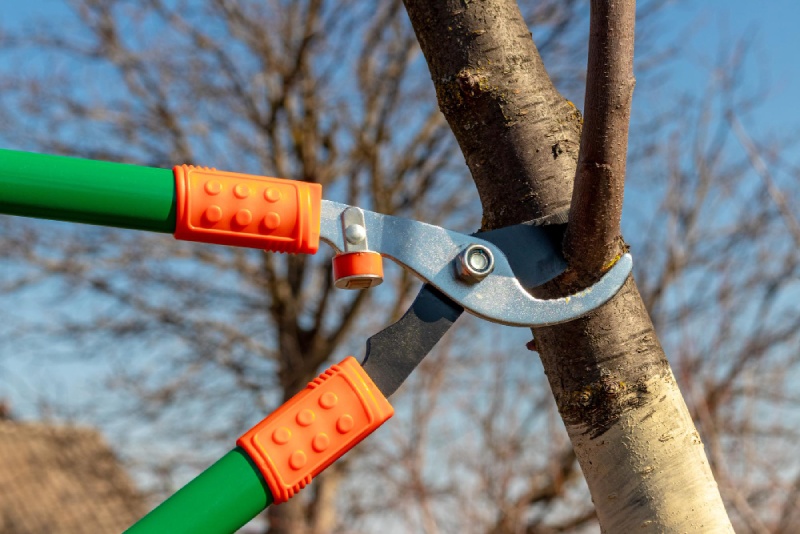
How often should trees be pruned? There is no single schedule that fits every tree: pruning frequency depends on age, species, growth rate, condition, and the tree’s surroundings. Young trees usually need more frequent structural attention, while mature trees are best pruned only when there is a clear health, safety, clearance, or structural reason.
Key Takeaways
• Tree pruning should be guided by purpose, not a calendar; the appropriate interval varies with tree age, species, condition, and location.
• Newly planted trees generally need only dead or broken branches removed initially, followed by periodic structural pruning as they establish.
• Young trees benefit from repeated structural checks because small defects are easier to correct before branches become large.
• Mature trees often require less live-branch removal, with maintenance focused on deadwood, structural defects, clearance, and risk reduction.
• Pruning too frequently or too heavily can remove too much leaf area, reduce stored energy, and create unnecessary wounds.
Why Pruning Needs Change with Tree Age and Species
Pruning needs to change because a young tree is still developing its permanent branch structure, whereas a mature tree is mostly pruned for safety, health, clearance, and longevity. The question is not simply how long it has been since the last prune; it is what the tree is trying to become and what problems are developing now.
For a young maple, oak, linden, or other shade tree, the priority is often structural pruning: selecting a strong main stem, spacing permanent branches, and correcting weak or competing growth while cuts are still small. For an established tree, professional tree pruning is more likely to focus on dead or damaged limbs, branches rubbing together, clearance from a roof or driveway, and defects that could become larger problems.
Species matters too. Fast-growing trees can develop new conflicts sooner than slower-growing trees, and some species are more sensitive to the timing or amount of pruning. Site conditions also affect the schedule: a tree growing over a driveway, play area, shed, or roof deserves closer attention than the same species growing in an open field.
- Young tree goal: build good branch structure with small, well-placed cuts.
- Mature tree goal: maintain sound structure and reduce specific problems without stripping the canopy.
- Site goal: keep branches compatible with buildings, walkways, traffic, neighbouring property, and how people use the space.
Signs Your Tree Is Overdue For A Prune
A tree is overdue for pruning when a specific defect, conflict, or maintenance objective needs attention, not merely because the canopy looks full. Dead, broken, hanging, rubbing, or poorly attached branches are clearer reasons to act than a general desire to make a tree look smaller.
- Dead or broken limbs are hanging over a driveway, roof, walkway, parking area, or any place where people spend time.
- Two branches are crossing and rubbing, causing repeated bark damage.
- A young tree has competing leaders or tightly attached branches that are growing larger each season.
- Branches are contacting the roof, siding, signs, or other structures and require deliberate clearance pruning.
- Storm damage has altered the canopy, leaving torn limbs, cracked unions, or new weight concentrated on one side.
Not every thin canopy, yellow leaf, or slow-growing branch is a pruning problem. Soil compaction, root damage, drought stress, or nutrient issues may require a different approach. When the problem appears to be below ground rather than in the branches, tree fertilization and soil amendment may be more appropriate than removing additional canopy. A certified arborist can help distinguish a branch-management issue from a tree-health issue before any cuts are made.
How Often Young Trees Need Structural Pruning
Young trees usually need structural pruning more often than mature trees because their permanent framework is still developing. A practical approach is to inspect them every year and plan professional structural pruning roughly every two to three years after establishment, adjusting sooner if a defect is growing quickly.
Structural pruning refers to the selective removal of branches to develop a young tree’s permanent framework, including a strong main stem and well-spaced branches that can carry future canopy weight.
For a newly planted tree, restraint matters. The International Society of Arboriculture recommends limiting early pruning to dead or broken branches and postponing other pruning until the second or third year, after the tree has had time to recover from transplanting. From there, repeated light corrections are usually better than waiting ten years and making large cuts.
- Years 0-2: remove dead, damaged, or broken branches; avoid unnecessary live-branch removal while the tree establishes.
- Years 2-10: review the structure regularly and correct competing leaders, poor branch spacing, and weak attachments while branches are still small.
- After the main structure is established: lengthen the interval and shift toward maintenance based on actual needs rather than automatic pruning.
The advantage is long-term. Small structural cuts close more readily and can reduce the need for major corrective work later. That is why early pruning is less about making a young tree look neat and more about helping it develop a strong framework that can support decades of growth.
Mature Tree Maintenance Pruning Schedules
Mature tree maintenance should be scheduled based on inspection findings, not an automatic annual trim. For many healthy landscape trees, reviewing the canopy every three to five years is a sensible planning rhythm — more often for trees near structures or with a history of defects, and less often for very large, low-risk trees in open areas — but a mature tree may need little or no pruning at one visit and prompt work after a storm at another.
A useful maintenance visit looks for deadwood, broken branches, weak unions, clearance conflicts, previous pruning wounds, and changes in the tree or the site. Mature trees generally tolerate aggressive live-branch removal less well than young trees, so the objective should be to remove only branches with a clear reason to come off and leave a healthy canopy that supports the tree.
- Healthy mature tree in an open area: periodic inspection may be enough between pruning visits.
- Mature tree near a house, driveway, or frequently used area: inspect more closely because the consequences of branch failure are greater.
- Tree with a history of storm damage, cracks, cavities, or root disturbance: use a shorter review interval and follow the arborist’s monitoring plan.
- After a major wind or ice event: re-check the tree even if the normal maintenance date is still years away.
If the concern is not simply routine pruning but whether a defect renders the tree unsafe, a hazard tree assessment is the better next step. For homeowners in Chatham, Wallaceburg, Tilbury, Blenheim, and surrounding rural areas, that distinction helps avoid both unnecessary cutting and unnecessary risk.
Why Over-Pruning Can Do More Harm Than Good
Over-pruning can harm a tree because leaves are the tree’s energy-producing system, and each cut creates a wound the tree must manage. Removing more live canopy than necessary can reduce growth, deplete stored energy, expose previously shaded bark, and trigger weak or excessive regrowth.
International Society of Arboriculture guidance notes that the amount of live tissue removed should depend on tree size, species, age, and the pruning objective, and that mature trees should generally lose less live canopy than younger trees. The safest target is not a percentage to remove; it is the minimum amount needed to achieve the objective.
- Avoid topping, which removes large portions of the crown and promotes poorly attached regrowth.
- Do not thin a healthy canopy simply because it looks dense; routine thinning does not automatically improve tree health.
- Do not remove large live branches without a clear reason if smaller, earlier corrections could have prevented the problem.
- If a proposal sounds like ‘take a third off every tree’ without considering species, age, condition, and site, ask why that amount is necessary.
Good pruning should leave the tree looking like a healthier, safer version of itself, not like a different tree. Chatham Tree Services’ brand standard is straight talk: if a tree does not need pruning yet, the helpful answer is to say so and explain what signs would justify the next visit.
Frequently Asked Questions
Can pruning too often hurt a tree?
Yes. Pruning too often can harm a tree when each visit removes healthy live canopy without a specific reason. Repeated cuts reduce leaf area, deplete stored energy, and create wounds the tree must close. Light removal of dead or broken branches is different; the concern is unnecessary or heavy pruning of live branches, especially on mature trees.
Do all trees need to be pruned every year?
No. Most landscape trees do not require full pruning every year. Young trees benefit from regular structural checks, while healthy mature trees may go several years between maintenance pruning visits. Annual visual inspections remain useful because storms, broken branches, clearance conflicts, or new defects can necessitate earlier inspections than the normal schedule.
What’s the difference between structural and maintenance pruning?
Structural pruning shapes the tree’s long-term framework, especially when it is young, by encouraging a strong main stem and well-spaced permanent branches. Maintenance pruning is more common on established trees and addresses dead, damaged, rubbing, weak, or conflicting branches. Both use selective cuts, but the objective shifts as the tree matures.
Can I prune my own trees or should I hire a certified arborist?
You can usually handle small, reachable cuts with clean hand tools if you know where to cut and can work safely from the ground. Hire a certified arborist when branches are large, high, near buildings or utilities, structurally questionable, or require climbing or rigging. An arborist can also tell you when the right amount of pruning is none.
Conclusion
How often trees should be pruned depends on age, species, condition, location, and a clear reason for each cut. Young trees usually benefit from more frequent structural pruning; mature trees need selective maintenance and regular observation rather than automatic annual trimming. The goal is simple: healthy, well-structured trees you do not have to worry about. If you are unsure whether a tree needs pruning now or can wait, request a free, no-obligation estimate and have a certified arborist explain what the tree needs and why.
