
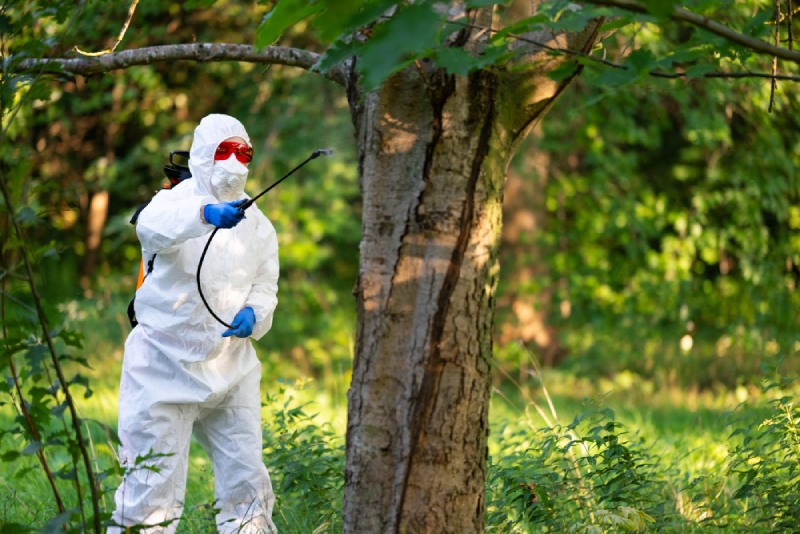
Integrated Pest Management is a practical approach to protecting trees by identifying the real problem, monitoring it, and combining prevention, cultural care, sanitation, and targeted treatment only when needed. For homeowners, IPM means treating the tree and its growing conditions as a whole instead of reaching automatically for a routine spray.
Key Takeaways
• Integrated Pest Management (IPM) combines monitoring with cultural, physical, biological, and chemical tools rather than relying on a single treatment method.
• Accurate pest or disease identification comes before treatment because similar symptoms can have very different causes.
• Reducing tree stress through suitable species selection, good soil conditions, and proper care can make pest problems less likely or less severe.
• Sanitation can help limit some pest and disease problems by removing affected material when that is the appropriate management step.
• Targeted pesticide treatment is one possible IPM tool, used when the diagnosis, pest biology, and level of risk justify it rather than as a calendar-based routine.
Cultural Control and Choosing the Right Species for the Site
Cultural control means changing how a tree is selected, planted, and cared for so the site is less favourable to pests and the tree is better able to tolerate stress. In many IPM plans, prevention starts long before an insect or disease becomes obvious.
The right tree in the right place matters because repeated stress can make pest management harder. Poor drainage, road salt, limited rooting space, or unsuitable light can weaken a tree over time.
- Choose species that fit the available soil, moisture, light, space, and exposure instead of forcing a favourite tree into a poor site.
- Plant at an appropriate depth and leave enough room for the roots and the mature canopy.
- Water newly planted or drought-stressed trees according to soil conditions.
- Avoid repeated trunk, root, and soil damage from equipment or construction.
If you are adding trees to a property in Chatham, Wallaceburg, Tilbury, Blenheim, or a nearby rural area, professional tree planting can match the species and planting approach to the site, preventing stress from day one.
Sanitation and Removing Infested Material From the Property
Sanitation helps reduce pest pressure by removing or managing material that can harbour insects or disease, but only after correctly identifying the problem. The goal is to interrupt a pest or disease cycle without unnecessarily removing healthy material.
Depending on the diagnosis, sanitation may include pruning affected branches, removing infested debris, or cleaning up material that can harbour pests or pathogens. Timing matters because pest and disease cycles vary.
- Do not move obviously infested firewood or branches to another property unless you know it is permitted and safe to do so.
- Do not assume every dead twig or spotted leaf needs to be removed; drought, root injury, and other stresses can mimic pest symptoms.
- Clean pruning tools when disease management requires it.
This is where a certified arborist earns their keep. A clear diagnosis prevents a well-intentioned cleanup from becoming unnecessary pruning or from moving a pest problem around the yard.
Soil Health as Part of Pest Prevention
Soil health is part of pest prevention because stressed roots can reduce a tree’s resilience. Compaction, poor drainage, unsuitable pH, excess salts, or improper nutrition can all contribute to decline.
Good IPM does not treat fertilizer as a cure-all. Similar symptoms can come from insects, disease, root damage, drought, or nutrient problems, so the cause should be assessed first.
- Protect the root zone from unnecessary traffic and repeated compaction.
- Use mulch correctly to regulate soil moisture and temperature without piling it against the trunk.
- Check drainage and watering before assuming a tree needs fertilizer.
- Use soil testing or a site assessment when nutrient or pH problems are suspected.
Chatham Tree Services offers tree fertilization and soil amendment when soil or nutrient conditions contribute to a tree-health problem. The useful question is not “What can we apply?” but “What is limiting this tree, and what change will actually help?”
When Targeted Treatment Is Added to the Plan
Targeted treatment is added to an IPM plan when accurate identification, monitoring, and the condition of the tree show that intervention is justified. Treatment may be directed at a specific insect, disease, or vulnerable life stage rather than applied broadly because a certain month has arrived.
Ontario guidance defines IPM as using all available tools and emphasizes identification, pest biology, action thresholds, appropriate controls, and follow-up. A product cannot fix the wrong diagnosis.
A targeted treatment plan may consider:
- Which pest or disease is actually present and whether it is capable of causing meaningful damage to the tree.
- How advanced the problem is and whether the tree is a suitable treatment candidate.
- The life stage or timing when treatment is most effective.
- Whether cultural care, pruning, sanitation, or soil correction should happen alongside treatment.
For problems that require direct control, Chatham Tree Services provides disease and insect control as part of a broader tree-care decision. For specific threats such as emerald ash borer, the treatment decision also depends on tree health, species, value, and how far the infestation has progressed.
We also have a dedicated emerald ash borer service page for homeowners assessing ash-tree risk and treatment options.
Why IPM Differs From Routine Spraying
IPM differs from routine spraying because it is a decision-making process, not a fixed pesticide schedule. Monitoring and prevention come first, and chemical treatment is used selectively when the identified problem and the level of risk make it appropriate.
A routine spray can miss a root or soil problem, treat a tree without the target pest, or repeat an application without checking results. IPM asks for evidence before action and evaluation afterward.
- Routine spraying starts with a product or a calendar; IPM starts with inspection and diagnosis.
- Routine spraying repeats the same action; IPM can combine prevention, sanitation, cultural care, monitoring, and targeted treatment.
- IPM identifies the pest, disease, stress, or site condition driving the symptoms and includes follow-up before repeating treatment.
Ontario pesticide rules also recognize IPM principles in certain tree-health decisions. For homeowners, the takeaway is simple: use the right action for the right problem at the right time.
Frequently Asked Questions
Is Integrated Pest Management safer than regular pesticide spraying?
IPM is designed to reduce unnecessary pesticide use by emphasizing identification, monitoring, prevention, and non-chemical controls first. That can reduce avoidable exposure, but safety still depends on the pest, product, application method, site, and people or wildlife nearby. A professional plan should explain why treatment is needed.
Does IPM work for both insect and disease problems?
Yes. IPM can address insect and disease problems because it is a management process, not a single product. The first step is determining whether symptoms are caused by an insect, pathogen, environmental stress, or multiple factors. The plan can then combine sanitation, pruning, soil or watering changes, monitoring, and targeted treatment.
How long does an IPM plan take to show results?
There is no single timeline for an IPM plan. Removing an active source of infestation may help quickly, while correcting soil stress or improving tree vigour can take a growing season or longer to assess. Some pests also require treatment at a specific life stage, so follow-up is part of the plan.
Is IPM more expensive than a one-time treatment?
Not necessarily. IPM may include diagnosis and monitoring up front, but it can also avoid repeated treatments that are not needed or are aimed at the wrong problem. Cost depends on the tree, pest, severity, treatment method, and follow-up. Chatham Tree Services can explain the recommended steps and provide a clear estimate first.
Conclusion
Integrated Pest Management works because it treats tree health as a system: identify the problem, reduce stress, use prevention and sanitation where appropriate, and apply targeted treatment only when the evidence supports it. That approach aligns with the way Chatham Tree Services talks to homeowners – clear information first, no scare tactics, and no unnecessary work. The goal is simple: healthier trees and fewer things to worry about on your property. If you are seeing insects, unusual leaf loss, dieback, bark damage, or other changes, get your free, no-obligation estimate and have a certified arborist explain what the tree needs and why.
