
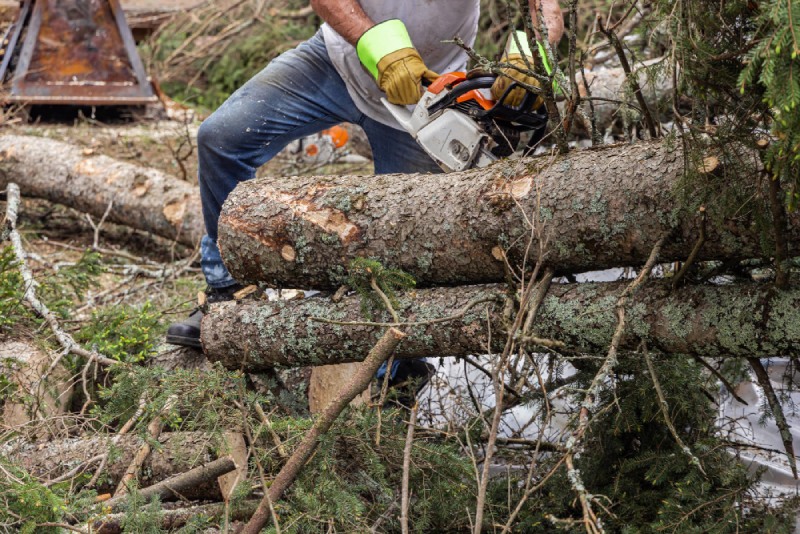
Storm damage to a tree on your property should be treated as a safety issue first and a cleanup issue second. Stay away from fallen or hanging limbs, especially near power lines. Then document the damage from a safe distance and arrange a professional assessment before cutting, pulling, or moving unstable wood.
Key Takeaways
• Treat any downed or low-hanging power line as energized; stay at least 10 metres away, and report it to 911 and the local electricity distributor.
• If it is safe, photograph the tree and property damage before routine cleanup. Then contact your insurer and keep cleanup records.
• Use emergency tree service for unstable hazards threatening people, structures, access, vehicles, or utilities; stable debris can usually be scheduled.
• Do not climb, pull, or cut hanging, split, uprooted, or tensioned limbs; storm-damaged wood can move suddenly.
• Keep people, pets, and vehicles away, then have an International Society of Arboriculture (ISA) certified arborist assess what can be saved.
Staying Safe Around Downed Limbs and Power Lines
The first step after storm damage is to keep people and pets away and to check for electrical hazards from a safe distance. If a branch, trunk, or entire tree is touching or obscuring a power line, do not approach the area.
Ontario’s Electrical Safety Authority advises treating every downed power line as live, staying at least 10 metres away, and calling 911 and the local electricity distribution company. A line does not need to spark to be energized, and branches can hide fallen wires, so wait for the utility to confirm the area is safe before cleanup.
- Do not stand or park under broken, hanging, or partially attached limbs.
- Do not climb a damaged tree or use a ladder to reach storm-broken branches.
- Do not use a chainsaw on wood that is bent, split, hung up, or carrying an unknown load.
- Do not remove branches from a roof, fence, shed, or vehicle if the remaining tree can shift when the branch moves.
Storm-damaged tree cleanup refers to the controlled assessment, pruning, removal, and debris handling required after severe weather damages a tree. A limb that appears still may be pinned under weight, while split trunks and uprooted trees can shift unexpectedly.
Documenting Damage For Insurance Before Cleanup Starts
If it is safe, photograph the tree and property damage before routine cleanup, then contact your insurer promptly. Photos help document what the storm damaged and what work was necessary before debris was moved.
- Take a wide photo showing the whole tree and its position relative to the house, driveway, fence, vehicle, or neighbouring property.
- Take close-up photos of broken limbs, trunk splits, uprooted roots, roof or siding damage, and other affected property without entering the danger area.
- Write down the date of the storm and any immediate steps taken to protect people or prevent additional damage.
- Keep written records of estimates, invoices, and receipts for emergency work, temporary protection, hauling, and cleanup.
Do not delay an urgent safety response to take photographs. If people or power lines are at risk, call emergency services or the utility first. For non-urgent cleanup, ask your insurer what documentation they require before material is hauled away.
A written scope from a professional storm damage repair and cleanup service can separate tree work from repairs handled by roofers, electricians, or other trades. Coverage and claim requirements vary by policy, so ask your insurer what is reimbursable.
When To Call for Emergency Removal Versus Scheduled Cleanup
Emergency removal is appropriate when the damaged tree poses an immediate or unstable hazard; scheduled cleanup is usually suitable when the tree and debris are stable, and the area can be isolated. Risk, not appearance, is the deciding factor.
Call for emergency tree help when:
- A tree or major limb is on an occupied building, vehicle, public road, driveway, or access route and could shift or fall further.
- A large branch is cracked, hanging, or partially attached over an area people need to use.
- The trunk has split, the root plate has lifted, or the tree has developed a new lean toward a house, a neighbouring property, or another target.
- The storm damage is entangled with electrical lines; stay clear and contact the utility before tree work begins.
Scheduled cleanup may be reasonable when:
- Branches are fully detached and lying on the ground, away from wires, structures, traffic, and unstable trees.
- The damaged area can be closed off without affecting safe access to the home or property.
- The tree is still standing normally, and no hanging limbs, new cracks, root movement, or other urgent defects are visible from a safe distance.
When you cannot tell whether a standing tree is stable, a hazard tree assessment is better than guessing. A certified arborist can identify what failed, what remains sound, and whether pruning, monitoring, or removal is appropriate.
What a Storm Damage Crew Handles Versus What to Leave Alone
A storm-damage crew should handle work requiring tree-risk judgment, climbing, rigging, cutting loaded wood, controlled removal, or debris processing. Homeowners should leave electrical hazards and unstable tree work to professionals.
- Assess the tree, remaining canopy, trunk, roots, and nearby targets before cutting starts.
- Remove broken or hanging limbs using controlled cuts and lowering techniques where needed.
- Prune torn or damaged branches back to appropriate locations when the tree can be retained.
- Section and remove a tree when the remaining structure is too unstable or damaged to remain safe.
- Chip branches, cut larger wood, and clean the work area according to the agreed scope.
Not every storm-damaged tree needs removal. If the remaining structure is sound, targeted tree pruning may be enough; if the trunk, roots, or major framework has failed, controlled tree removal may be safer. Chatham Tree Services explains which situation you have and why, instead of treating every broken branch as a removal job.
Tree crews also have clear limits: utilities handle distribution lines and poles, licensed electrical contractors handle property electrical equipment, and building contractors handle structural repairs. Keeping roles separate makes urgent work safer.
Preventing Further Damage While Waiting for Help
While waiting for help, prevent further damage by restricting access and avoiding actions that could make the tree less stable. You may not be able to strengthen it yourself, but you can reduce exposure by keeping people and property away.
- Keep children, pets, visitors, and vehicles away from the damaged canopy and from any leaning or suspended wood.
- Close the gates, use visible barriers, and let neighbours know if the affected area is near a shared driveway or property line.
- Move portable furniture or equipment only when you can do so without walking beneath the damaged tree or entering an electrical hazard area.
- Do not tie the tree to a vehicle, building, fence post, or another tree; improvised pulling or bracing can alter the load and trigger movement.
- If the lean, crack, root movement, or hanging branch changes while you wait, move farther away and update the tree service once it is safe to do so.
After a widespread storm in Chatham, Wallaceburg, Tilbury, Blenheim, or nearby rural areas, many properties may need help at once. When you call, provide the address, explain whether a structure or access is affected, mention any power lines, and describe visible trunk or root damage. That helps the crew assess urgency.
Frequently Asked Questions
Is it safe to move fallen branches myself after a storm?
Only small, loose branches on the ground should be considered for homeowner cleanup, after confirming there are no downed wires, hanging limbs, unstable trees, or loaded wood nearby. Do not climb, use a ladder, or cut bent or suspended branches. If a chainsaw, rigging, height, or uncertain stability is involved, leave it to a qualified tree crew.
Should I call my insurance company before or after cleanup?
If there is no immediate safety emergency, photograph the damage and contact your insurer before major cleanup. If people, power lines, access, or the building are in danger, safety comes first: call the appropriate emergency service or utility, document what you safely can, and notify your insurer promptly. Keep estimates, invoices, and cleanup receipts.
What if a tree is leaning but hasn’t fully fallen?
Treat a new lean after a storm as a reason to keep your distance and arrange an assessment, especially if the soil is lifted, roots are exposed, the trunk is cracked, or the tree is moving toward a house or road. Do not pull the tree upright, brace it with a vehicle, or cut roots or limbs to balance it. A certified arborist should determine whether it can be retained.
How quickly can Chatham Tree Services respond after a storm?
Response time depends on storm severity, call volume, location, and whether the tree poses an immediate hazard. Chatham Tree Services offers emergency storm response, and widespread storms may affect how quickly a crew can reach each property. When calling, clearly describe power lines, structures, blocked access, hanging limbs, or a new lean so the situation can be triaged.
Conclusion
After storm damage, the order matters: protect people, avoid electrical hazards, document what happened, and then get qualified help before unstable cleanup begins. A damaged tree may need selective pruning, monitoring, or removal, and a certified assessment helps you avoid both unnecessary cutting and unnecessary risk. Chatham Tree Services has cared for trees across Chatham-Kent since 1992, using a calm, straight-talk approach built around trees you do not have to worry about. If your storm-damaged tree is stable enough for a scheduled visit, get your free, no-obligation estimate and have an arborist explain what the tree needs and why.
