
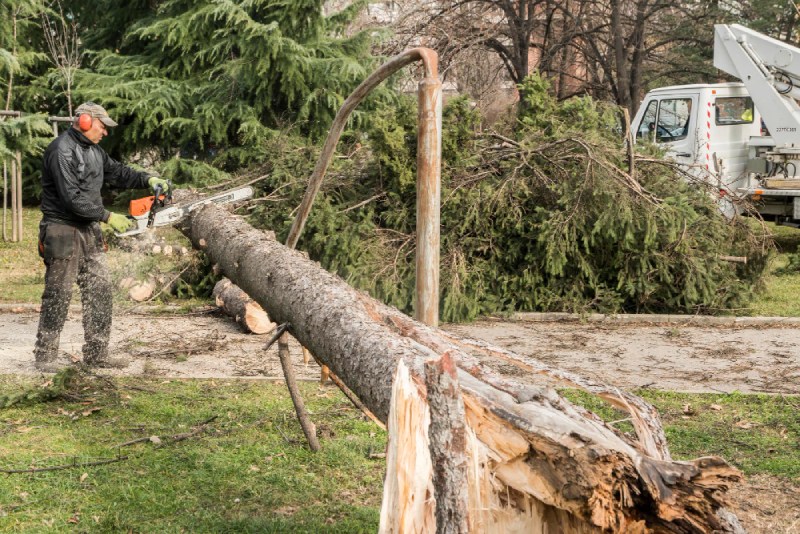
Tree removal should be the last resort when a tree can be kept healthy and structurally sound, but saving a tree is not always the safest option. The decision hinges on whether the problem is seasonal or treatable, whether major structural defects are present, and what could be damaged if part of the tree fails.
Key Takeaways
- A leafless deciduous tree in winter may be dormant, not dead; live buds, flexible twigs, and green tissue beneath a small scratch in the bark can indicate living wood.
- Pruning can remove defective branches, but it cannot repair severe trunk decay, major cracks, root failure, or a dead tree.
- A lean is most concerning when it is new or worsening, especially when accompanied by lifted soil, cracked roots, trunk splits, or a target such as a home, driveway, or play area.
- A certified arborist assesses tree condition, defects, site conditions, potential targets, and practical ways to reduce risk before recommending removal.
- Before agreeing to removal, ask what defect was found, how urgent it is, what alternatives are available, and exactly what the quoted work covers.
Signs a Tree Is Dead Versus Simply Dormant
A tree with no leaves is not necessarily dead. In Chatham-Kent, deciduous trees remain dormant for months, so the safest way to judge is to check several signs together rather than relying on appearance alone.
Start with the smaller twigs and buds. Dormant branches may still carry firm buds and retain some flexibility, while dead twigs are often dry and brittle. A gentle scratch on a small, suspect twig can also offer a clue: green, moist tissue just beneath the bark indicates that the tissue is still alive, while brown, dry tissue means that spot is dead. Do not scrape the trunk or treat one scratch as a complete diagnosis.
- Look for buds that are intact rather than shrivelled or missing across most of the canopy.
- Check whether small twigs bend slightly or snap cleanly when dry, with very little pressure.
- Consider timing. A tree that has not leafed out by the end of the normal spring growth period warrants closer inspection.
- Look at the pattern. One dead limb does not mean the whole tree is dead, but widespread dieback, along with trunk or root problems, is more serious.
Winter makes this distinction especially important. If you are unsure, waiting for the right seasonal cue or having an arborist inspect the tree can prevent the unnecessary removal of a healthy, dormant tree.
Structural Problems Pruning Alone Can’t Fix
Pruning can correct many branch-level problems, but it cannot restore wood or roots that have already lost structural strength. When the defect involves the trunk, root system, or several major unions, an arborist may need to consider support, monitoring, or removal rather than simply pruning branches.
Examples include extensive trunk decay or cavities, major cracks or splits, root-plate movement, severe root damage, a dead main stem, or structural weakness that cannot be reduced to an acceptable level by removing individual branches. These problems are different from a broken limb or an overcrowded canopy, where professional tree pruning may be enough to improve structure and reduce load.
- Large cracks at the trunk or at major branch unions can indicate that important wood fibres are separating.
- Fungal growth, cavities, or soft, decayed wood at the trunk or base can signal lost strength that pruning cannot replace.
- Soil heaving, exposed or broken roots, or movement at the base can indicate root instability.
- A dead tree has no living system left to recover, so the decision is about how and when to remove it safely rather than how to restore it.
Some structural problems can be managed with a combination of pruning, cabling or bracing, and periodic reassessment. The point is not to choose the least dramatic treatment; it is to choose a treatment that actually reduces risk without weakening the tree further.
When a Leaning Tree Is a Genuine Hazard
A leaning tree is a genuine hazard when the lean is linked to instability, damage, or a meaningful target, not simply because the trunk is not vertical. Many mature trees have grown with a lean for years; the concern arises when the lean is new, increasing, or accompanied by root or soil movement.
- A new lean that appeared after high winds, saturated soil, or a storm.
- Cracked or lifted soil around the base, especially on the side opposite the lean.
- Fresh root damage, exposed roots, or visible movement where the trunk meets the ground.
- New trunk cracks or splits that developed as the tree shifted.
- A lean towards a house, driveway, road, play area, or another place where people or valuable property are regularly present.
If a tree suddenly changes position after a storm, keep people and vehicles away from the likely fall zone and arrange a professional assessment promptly. Do not try to pull, cable, or brace a large leaning tree yourself.
Some leaning trees can be retained if the root system is stable and the structure can be managed through pruning, support, or site changes. Others cannot. The lean must be assessed in the context of the tree’s history, defects, and surroundings.
What a Certified Arborist Checks During an Assessment
A certified arborist checks more than whether a tree looks healthy. A useful assessment combines the tree’s condition with the likelihood of a tree or branch failing, what it could hit, and practical steps to reduce the risk.
A tree risk assessment is a systematic evaluation of a tree, its site, potential targets, and possible failure points to help decide whether the risk can be managed or the tree should be removed.
- Health and vitality: canopy density, buds, leaf condition in season, dieback, and obvious pest or disease symptoms.
- Structural defects: cracks, cavities, decay, weak branch unions, dead limbs, and other visible signs of damage.
- Roots and trunk base: root damage, soil movement, decay at the base, and changes caused by construction or grading.
- Site and targets: homes, sheds, driveways, roads, play areas, neighbouring property, and how often people use the area beneath the tree.
- Tree history: storm damage, recent leaning, past pruning, construction near the roots, or a sudden change in appearance.
- Risk-reduction options: pruning, cabling or bracing, changing the target area, monitoring, treating a health problem, or removing the tree.
For homeowners in Chatham, Wallaceburg, Tilbury, Blenheim, and nearby rural areas, a hazard tree assessment should conclude with a clear explanation of what was found and why it matters. At Chatham Tree Services, the goal is to provide an honest recommendation – including when a tree can stay. The International Society of Arboriculture also publishes a homeowner guide to recognizing tree risk for those who want to understand common warning signs before an on-site assessment.
Questions to Ask Before Agreeing to a Removal
Before you approve tree removal, you should understand the reason for the recommendation, the alternatives, the urgency, and the scope of the work. A reputable conversation should leave you more informed, not pressured.
- What specific defect or condition makes removal the recommended option?
- Is the concern the entire tree, a major branch, the roots, or the tree’s location?
- Could pruning, cabling or bracing, treatment, or monitoring reduce the risk enough to keep the tree?
- How urgent is the work, and what signs would mean the timeline should change?
- What is included in the quote: tree removal, debris hauling, wood, cleanup, and stump grinding?
- Who will perform or oversee the work, and what tree-care credentials do they have?
For a large, mature, or high-value tree, it is reasonable to ask for the recommendation in plain language and to seek a second opinion if you still do not understand why removal is necessary. If removal is the right call, a professional tree removal plan should also explain how nearby structures, lawns, gardens, and remaining trees will be protected.
Frequently Asked Questions
How can I tell if my tree is dead or just dormant for winter?
The best clue is a combination of signs, not a single symptom. A leafless deciduous tree is completely normal in winter. During the growing season, the absence of bud break, brittle twigs, widespread dieback, and no green tissue beneath the bark on several small branches raise concern. A scratch test is a useful indicator, but it is not a comprehensive tree health assessment.
Can a leaning tree always be saved with cabling?
No. Cabling can support weak branches or branch unions, but it cannot reverse root failure, major trunk decay, or a tree already moving in the soil. When support is appropriate, an arborist considers the defect, the remaining sound wood, the target area, and how the tree will be monitored over time.
What happens if I wait too long to remove a hazardous tree?
Waiting can allow some defects to worsen, especially dead wood, active cracks, root instability, or decay. The consequences can be more serious when the tree is near people or structures. Not every hazardous tree is an immediate emergency, though. Ask the arborist to explain the urgency, what to avoid in the meantime, and whether monitoring is reasonable.
Does removing one tree affect the health of trees nearby?
Sometimes. Removing one tree can alter sunlight and wind exposure for nearby trees, and limited equipment access can disturb soil or roots if the work area is tight. A careful removal plan protects root zones, avoids unnecessary compaction, and considers whether neighbouring trees may benefit from follow-up pruning, inspection, or monitoring after the work is complete.
Conclusion
The right answer is not always removal, nor is it always saving the tree. What matters is whether the tree can remain healthy and stable at an acceptable level of risk for the people and property around it. Chatham Tree Services has cared for trees across Chatham-Kent since 1992, using certified arborists’ judgment and straightforward talk rather than scare tactics. The goal is simple: trees you don’t have to worry about. If you want a clear answer about a tree on your property, request a free, no-obligation estimate, and we’ll explain what we see before any work is scheduled.
